Ceiling Fan Setup Orange County: Keep Cool and Conserve Energy
A good ceiling fan earns its keep on the hottest September afternoons and the chilly mornings that follow the Santa Ana winds. In Orange County, where microclimates shift from coastal fog to inland heat over just a few miles, a properly chosen and installed ceiling fan can smooth comfort across those swings while cutting energy costs. As a licensed electrician who has worked from San Clemente to Fullerton, I have seen small details make big differences: a blade pitched two degrees too shallow, a fan hung from a non-rated box, or a downrod that leaves blades skimming too close to a vaulted ceiling. When these details are right, the room feels quieter, cooler, and more balanced. When they are wrong, you hear it, feel it, and sometimes pay for it with drywall cracks or a burned switch.
This guide explains how to get ceiling fan installation right in Orange County homes and businesses, with practical notes on sizing, mounting, code, costs, and the trade-offs that actually matter. It also touches on how fan projects connect to broader electrical work such as lighting installation, smart home wiring, or even an electrical panel upgrade when the existing system shows its age.
Why ceiling fans deliver real savings in our climate
Air conditioning cools air. Fans do something else: they move air across your skin and even out temperature layers in a space. In summer mode, the moving air boosts evaporation on your skin, which lets you raise the thermostat a few degrees without losing comfort. A typical household can increase the cooling setpoint by 3 to 4 degrees and maintain the same perceived comfort, shaving around 10 to 20 percent off cooling energy depending on insulation and occupancy. Since a modern fan uses 15 to 75 watts on low to medium, versus thousands of watts for a central AC or a ductless unit, the math often favors fans during shoulder seasons and evenings.
Come winter, reversing the fan direction at a slow speed brings warm air down from the ceiling without creating a draft. That helps in tall spaces like Mission Viejo great rooms and Costa Mesa bungalows with added beams. You are not heating the air more, you are using the heat you already paid for.
I see the most benefit when fans are part of a whole-house comfort strategy. Pair them with good attic insulation and a programmable thermostat. Use them at night to pull coastal air through a home near Huntington Beach, then shut windows in the morning. For many families, that adds up to a lower utility bill and less cycling on the compressor, which often pushes the lifespan of HVAC equipment well beyond the typical range.
Choosing the right fan for the room
Most problems I get called to fix began at the selection stage. A sleek, undersized fan looks great in a photo but struggles in a 400-square-foot bonus room. Likewise, a heavy, ornate fan on a pancake box is asking for trouble. Match the fan to the room and you avoid noise, wobble, and disappointment.
Airflow rating matters more than blade count. Look for the cubic feet per minute (CFM) at medium and high speeds. A solid residential fan delivers 3,000 to 6,000 CFM at high. Premium models can exceed 7,000 CFM with efficient DC motors. More blades do not equal more air. Blade pitch between about 12 and 15 degrees usually hits the sweet spot for quiet operation and good airflow.
Mounting height drives comfort and noise. Keep blade tips at least 7 feet above the floor to meet code, and ideally around 8 to 9 feet for best feel. If you have a 10 to 12-foot ceiling, a downrod helps the fan reach clear air, which improves performance and reduces the flutter you get when blades hug the ceiling. For vaulted ceilings, use a slope adapter designed for the brand and confirm the mounting kit covers your roof angle.
Fans outdoors and in bathrooms need the right rating. Along the coast, salt air finds weak finishes in a season or two. Choose a damp-rated fan for covered patios in Irvine or Laguna Niguel, and a wet-rated unit for gazebo or pergola locations exposed to direct spray. In smaller baths near the tub or shower, damp-rated models hold up better to steam and humidity.
Light kits and control options should match how you live. If the fan is the primary light source, a high-quality LED kit with warm color temperature and dimming changes a space more than a marginal bump in airflow. For controls, hardwired wall controls with separate fan and light functions beat pull chains in daily use. Smart controls can tie fan speeds to temperature, motion, or schedules, but they work best when the wiring and the home network are ready to support them.
A quick, practical sizing guide
- Up to 100 square feet: 29 to 36 inches, about 2,000 to 3,000 CFM for bedrooms and offices.
- 100 to 225 square feet: 42 to 52 inches, 3,000 to 5,000 CFM for living rooms and larger bedrooms.
- 225 to 400 square feet: 52 to 60 inches, 4,000 to 6,500 CFM for great rooms or open-plan areas.
- Over 400 square feet or high ceilings: consider multiple fans or one 60 to 72-inch model rated 6,000 CFM or more.
- Outdoor or breezy spaces: favor higher CFM and damp or wet ratings, and check for coastal-resistant finishes.
These are not hard rules. A 52-inch fan in a room that runs hot by late afternoon may need a more aggressive pitch or a DC motor for better torque. In a nursery, quiet operation may matter more than maximum CFM. Let comfort goals lead the decision.
The part you do not see: proper support and wiring
The best fan is only as good as what it hangs from. Too often, we find fans bolted to plastic or thin metal boxes only rated for light fixtures. Under load, those boxes can crack or pull loose, especially with longer downrods or heavier fans. California Electrical Code, following NEC 314.27, requires that a ceiling outlet box used for a fan be listed for fan support. In practical terms, that means a fan-rated box and brace that can support 70 pounds or more, fastened to the structure, not just the drywall.
In older homes from Santa Ana and Orange, I frequently install an adjustable brace that spans between joists with a fan-rated box. It takes an experienced hand to position it square, avoid damaging plaster, and route the wiring with proper strain relief. On remodels with open framing, we secure a metal fan box directly to the joist, then run a new cable to the switch. Pancake boxes can be acceptable in tight spaces, but only when they are expressly fan-rated and anchored properly.
Wiring details separate a clean install from a headache. If the fan and light should be controlled independently from a single location, we run a 3-conductor cable from the switch box to the fan box. That allows two switched legs plus a neutral. In many older OC houses, I still find switch loops without neutrals, which complicates smart control installations. Bedrooms typically require AFCI protection, so we verify the circuit meets current safety standards at the panel or through a listed device. Where circuits run near moisture, such as outdoor fans near pools, GFCI protection may be required.
If your panel is dated or maxed out, a small project like a fan can expose the bigger issue. A service that trips frequently, rust on the bus, or a mix of mismatched breakers signals it is time to consider an electrical panel upgrade Orange County homeowners commonly undertake when adding HVAC, solar, or EV charging. I have had more than one visit start as ceiling fan installation Orange County residents requested and end with a recommendation for panel replacement Orange County permits can process quickly when safety concerns are clear.
What an experienced electrician looks for on site
When a homeowner calls an Orange County electrician to install a new fan, we start with a simple walk-through. We look at ceiling structure, access from the attic, existing box type, switching, and age of wiring. If the home was wired in the 60s or early 70s, aluminum branch conductors might be present. In that case, we use listed Al-Cu connectors and antioxidant compound at terminations or replace the run where feasible. In bedrooms, we verify AFCI protection. In garages converted to living space, we check that the conversion was https://ameblo.jp/trevorejut209/entry-12973567824.html permitted and grounded, as I have seen too many suspect junctions hidden behind drywall.
We also pay attention to finishes. On a plaster ceiling with original texture in Old Town Tustin, cutting in a larger brace box might save time now but leave an expensive patch and paint job. A creative solution is to use a medallion or a trim ring that covers the old opening cleanly while preserving structure. On a new build in Irvine with open cell foam, we coordinate the cut with the builder so we do not disturb the vapor control layer more than necessary.
Finally, we consider controls. If you plan to integrate the fan with a smart thermostat or a whole-home platform, we choose a model with compatible modules and make sure a neutral is present in the switch box. Smart home wiring does not have to be expensive, but it does have to be planned before the drywall is closed.
The install, from prep to test
Homeowners often ask what a typical installation looks like when everything goes smoothly. In a single-story house with attic access and an existing, properly supported box, we can often complete a standard fan swap in under two hours. New locations take longer, especially without attic access. Here is a simple pre-installation checklist that helps projects go faster and avoids surprises.
- Confirm the ceiling box is listed for fans or plan to replace it with a fan-rated brace and box.
- Verify blade clearance: at least 18 inches from walls or beams, and 7 feet from floor to blade.
- Choose control method: separate fan and light switches, a remote, or a smart wall control that needs a neutral.
- Check circuit capacity and protection: AFCI in bedrooms, GFCI where near moisture, panel space and labeling.
- Lay out downrod length and slope adapters if the ceiling is over 9 feet or vaulted.
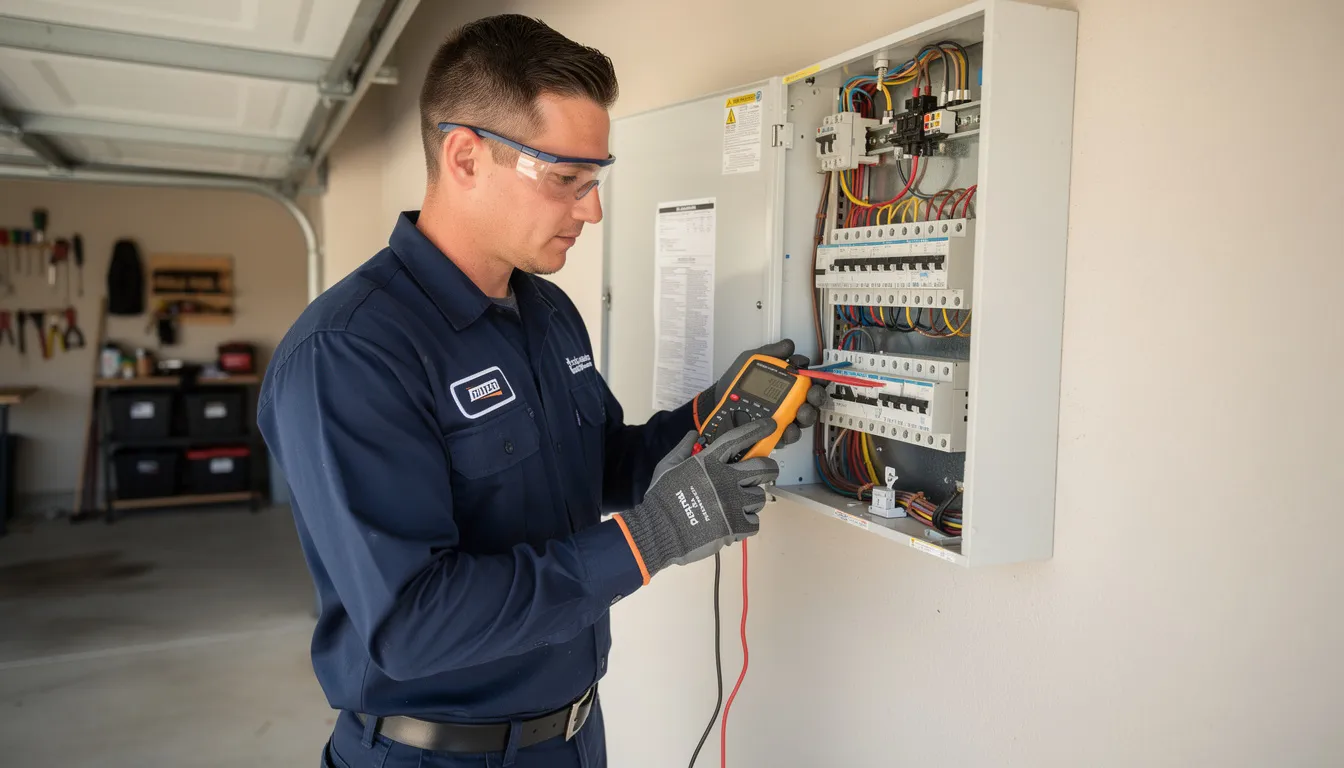
During installation, we shut off the correct circuit at the panel and confirm with a meter. We remove the old fixture, inspect the box and any splices, and upgrade the support if needed. We assemble the fan on a padded surface, mount the bracket, hang the motor, and make the electrical connections with torque verified to the manufacturer’s spec. We take extra care to route the antenna for remote models away from metal. On fans with integrated LED light kits, we test dimming ranges to avoid flicker and set a minimum level that holds steady.
Balancing is the unglamorous step that saves callbacks. Even quality fans can wobble on first run due to blade weight tolerances or uneven mounts. A simple balance kit and patient testing usually dials it in. When a fan still wobbles after balancing, the culprit is often a mounting surface that is not flush or a box that is not square. A minor shim behind the bracket can fix what hours of blade tweaking cannot.
Quiet operation, or why some fans hum
Noise complaints usually trace back to one of three issues. One, electronic controls paired with older AC motors can introduce audible hum at certain speeds. If quiet operation is top priority, choose a DC motor fan with a matched controller. Two, mounting hardware that is even slightly loose transmits vibration through a rigid bracket into drywall, which acts like a drumhead. Tightening hardware to spec with lock washers or thread compound stops the resonance. Three, airflow noise from the blades hitting air trapped near the ceiling shows up in low clearances. A slightly longer downrod often solves it.
Anecdotally, the quietest installs I have done combine a DC motor with a solid, fan-rated box anchored into a joist, a downrod that puts the fan in clean air, and a wall control with a gentle ramp-up. In kids’ rooms, I set the initial speed one notch lower than what adults choose. The room feels just as comfortable, but the motor tone drops below what most people notice at night.
Dealing with surprises in older homes
Mid-century tract homes from Garden Grove to Westminster hide quirky wiring. It is not uncommon to find switched neutrals, abandoned junctions under insulation, or multiple feeds tied in a ceiling box. When we find this, we correct it rather than paper over it. While that takes more time, it prevents ongoing nuisance tripping and makes future projects easier. If you have a room that flickers when the fridge kicks on, that may be a sign the branch circuit is overloaded or the neutrals are loose in the panel. A quick Orange County electrical repair can cure that, or it may point to a larger need for whole home rewiring Orange County homeowners sometimes undertake in phases.
In some older condos, associations limit penetrations into fire-rated assemblies. We coordinate with the association and the city. Some cities in the county treat a fan added to an existing fan-rated box as a like-for-like swap without a permit. Others require a simple electrical permit for a new outlet box or new wiring. When we act as the Orange County electrical contractor on a project tied to larger remodels, we include the fan locations in the permit set so there is no ambiguity.
Integrating fans with lighting plans
The best ceiling fan becomes part of the room, not a distraction. That takes a little planning. If recessed lighting Orange County homeowners favor is already in place, you can often skip a fan light kit and preserve a clean look. Place downlights to avoid strobing as the blades spin. For example, in a 12 by 16 living room with a 52-inch fan, set four 6-inch cans at roughly 3.5 feet from the walls and keep them at least 20 inches from the fan sweep. That offsets the light cones so the blades do not chop the beam.
If you prefer a fan with a light, choose an LED kit with a high-quality driver and the same color temperature as the other fixtures. A mismatch between 2700K and 3000K looks worse than most people expect. In kitchens or offices, a fan with a broad, diffused light balances the task lighting under cabinets. For outdoor lighting Orange County patios often need, coordinate the fan light with sconces on dimmers so you can pull the light level back while the fan runs at a comfortable speed.
Smart controls, real benefits
Smart controls for fans work best when they solve specific problems. In rental units or vacation homes, occupancy-based control can shut off fans left running for days. In nurseries, a schedule that slows the fan late at night reduces drafts without waking anyone. If you already have smart thermostats and sensors, a connected fan control can raise the setpoint two to four degrees automatically when the room is occupied, then settle back when it is empty.
Most smart wall controls need a neutral in the box and a consistent line voltage. I have replaced plenty of impulsive purchases when a homeowner discovered only a switched leg was present. If you plan to expand smart home wiring later, consider running a new 3-conductor cable to the fan along with a neutral to the switch location now. It costs far less to do it during a fan installation than to open the wall again.
Costs, timelines, and when to call for help
Labor costs in Orange County reflect access, age of the home, and scope. Replacing a fan at an existing, fan-rated box with a simple control typically ranges from about $150 to $300 in labor when everything is ready and accessible. Running a new fan location with attic access, proper bracing, and separate controls usually lands around $350 to $700. Without attic access or in homes with plaster ceilings and limited routing options, expect $600 to $1,200 depending on patching, painting, and the complexity of the path. Permits, where required, are usually modest for this scope, though the fee varies by city.
Same day electrician Orange County calls are common during heat waves when fans fail. A top rated electrician Orange County residents rely on will still take the time to verify support and wiring rather than rushing a swap that could cause damage. If your fan sparks, smells hot, or wobbles dramatically, shut it off and schedule an emergency electrician Orange County dispatch if there is a burning odor or evidence of arcing. Safety first.
If you are also planning an EV charger installation Orange County inspectors see frequently now, it can be efficient to coordinate both projects. An electric vehicle charger often drives upgrades at the panel or subpanels, and while we are already working in the attic or walls, running the proper cabling for a fan or for low voltage wiring like thermostat or sensor lines adds little incremental cost.
Commercial spaces and high ceilings
Commercial electrician Orange County projects range from community centers to restaurants. In tall spaces like yoga studios or brewery taprooms, high volume, low speed fans help destratify the air so HVAC runs less while patrons feel comfortable. These units are heavier and require engineered supports. Noise matters differently in a commercial setting. A subtle hum that is barely audible at home becomes a problem if it competes with music or conversation. We use vibration isolators, confirm that steel studs or trusses can handle the point loads, and coordinate with lighting so there is no strobing over the bar or the stage.
Restaurants along PCH often combine outdoor fans with patio heaters. We separate circuits, apply GFCI protection where needed, and use corrosion-resistant hardware. When salt and spray are constant companions, stainless fasteners and wet-rated fixtures pay for themselves.
Maintenance and small fixes that extend life
Ceiling fans do not ask for much. Tighten visible screws annually, dust the blades, and check that the canopy and light kit are snug. If a pull chain becomes stiff, do not force it. The switch can be replaced, but a stripped or yanked chain can mean a new fan. Light flicker on a new LED kit often traces back to an incompatible dimmer. We keep a short list of dimmers that play nicely with the brands we install most.
If a fan begins to wobble after a few quiet years, look first at blade warping from humidity or loose blade irons. A small re-balance can restore smooth operation. If you live near the water, expect to replace outdoor fans more frequently despite good ratings. Salt carries a ledger that always gets paid.
Where ceiling fans fit in the bigger electrical picture
A fan project often reveals the health of a home’s electrical system. Knob-and-tube concealed behind newer drywall is rare but not gone. Miswired multi-wire branch circuits in older duplexes show up when we tie into a ceiling box and see shared neutrals. Both are solvable, but they suggest it is time for a thorough electrical inspection Orange County homeowners can schedule before a remodel.
If breakers trip when you add the new fan and a space heater, that is a hint that certain circuits carry more load than they should. In these cases, we may recommend redistributing loads or adding a new circuit back to the panel. In bedrooms and common areas, AFCI breakers reduce the risk from damaged cords or staple-pinched wiring. In garages or near wet areas, GFCI protection belongs in the plan. The best electrician Orange County residents can hire gives straight answers here, with code, safety, and long-term convenience in mind.
When a panel is beyond its service life or shows signs of heat damage, panel replacement might be the right next step. Coordinating that with other work like generator installation for outage resilience or new circuits for a workshop saves money and avoids repeat visits. Affordable electrician Orange County is not just a phrase, it is the outcome of doing related work in the right sequence.
When DIY makes sense, and when it does not
If you are swapping a light for a fan in a room with a proper fan-rated box and straightforward wiring, a skilled homeowner can handle the task with patience and the right tools. The moment you see brittle insulation, ungrounded metal boxes, or a box that flexes when you tug on it, pause. That is the point where calling a residential electrician Orange County trusts will save frustration and risk.
For condos, commercial spaces, or units with limited access above the ceiling, it pays to bring in a local electrician Orange County inspectors and HOAs already know. Clear documentation, clean work, and quick adjustments during inspection make the process smoother. If timing is tight, a 24 hour electrician Orange County teams maintain for urgent issues can at least make things safe until regular hours resume.
A few real-world examples
A family in Aliso Viejo asked for a fan in an upstairs bonus room that baked after school. The room was wired for a ceiling light on a simple switch loop. We replaced the box with a fan-rated brace, ran a new 3-conductor cable to give them independent fan and light control, and added a short downrod so the blades cleared the tray ceiling detail. We also set up a wall control compatible with their existing hub so the fan slows automatically at 10 p.m. Their AC now runs less in the early evening, and the kids actually use the space.
A small coffee shop in Santa Ana had three quiet fans and a constellation of track lights that stuttered like a bad film reel. The strobing came from beam overlap and blade sweep. We moved two heads, changed trim angles, and altered the fan speed schedule. The fix cost far less than replacing the fans and made the shop feel calmer, which the owner swears affects how long people stay.
Near Dana Point, a homeowner wanted outdoor fans under a newly built pergola. We selected wet-rated units with sealed housings, stainless hardware, and a finish rated for coastal exposure. The circuits run through a weatherproof box with in-use covers, and we tied the fans into the same smart system as the landscape lighting so one scene sets the whole patio for dinner. Two winters later, those fans still look new.
Finding the right professional
Searches for electrician near me Orange County or top rated electrician Orange County will turn up a long list. Focus on a few markers: proof of licensure and insurance, experience with both residential and commercial work if your project straddles those lines, and clear, detailed estimates. Ask how they address support boxes, how they handle surprises like aluminum branch wiring, and whether they verify AFCI and GFCI protection as part of the job. A licensed electrician Orange County inspectors recognize will answer directly and set expectations on cost and timing.
If your project grows into more, choose an Orange County electrical contractor comfortable with broader scopes: adding recessed lighting, relocating outlets, or solving the source of persistent flicker through electrical troubleshooting Orange County homes with aging wiring often need. The best outcomes come from seeing the house as a system, not a collection of one-off tasks.
Final thoughts from the field
Ceiling fans succeed when they are chosen for the room, mounted to real structure, wired with intention, and tuned for quiet operation. They are simple machines, but they react to the spaces we put them in. Inland or coastal, old plaster or new drywall, single-story ranch or tall foyer, there is a solution that looks good, feels right, and saves energy. With the right plan and a steady hand, a ceiling fan installation in Orange County becomes one of those upgrades you stop thinking about because it just works, day after day, season after season.